Sankranti Festival
Sankranti Festival – The Joyous Harvest Celebration of India
Sankranti, also known as Makar Sankranti, is one of India’s most celebrated harvest festivals, especially in Telangana and Andhra Pradesh. It marks the Sun’s transition into the zodiac sign of Capricorn (Makara) and the beginning of Uttarayana, symbolizing longer days, prosperity, and new beginnings.
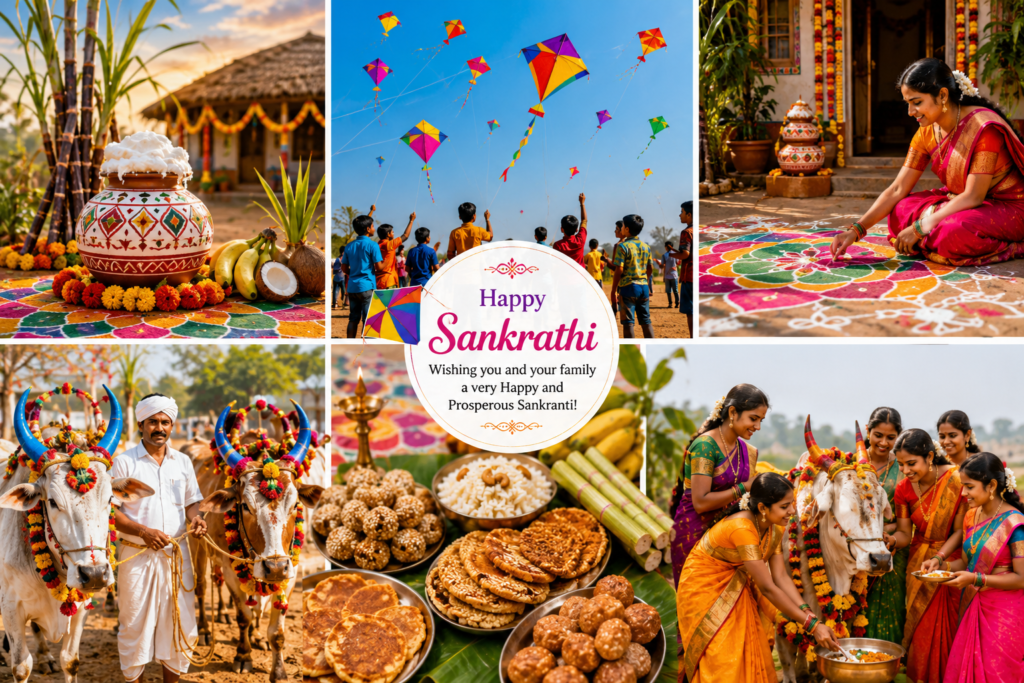
Celebrated with colorful rangoli (Muggu), kite flying, traditional foods, Gangireddu processions, and joyful family gatherings, Sankranti reflects the rich agricultural heritage and vibrant culture of the Telugu states.
What is Sankranti Festival?
Sankranti is a harvest festival that celebrates the successful harvest season and honors farmers for their dedication and hard work. It is observed every year on January 14 or 15 and is one of the few Hindu festivals celebrated according to the solar calendar.
The festival represents gratitude towards nature, the Sun God (Surya), and cattle, which play an essential role in agriculture.
Significance of Sankranti Festival
Sankranti holds great religious, cultural, and agricultural importance.
Why is Sankranti Celebrated?
- Celebrates the harvest season.
- Marks the Sun’s entry into Capricorn (Makara).
- Begins the auspicious period of Uttarayana.
- Expresses gratitude to nature and farmers.
- Brings prosperity, happiness, and new beginnings.
- Strengthens family and community bonds.
The festival symbolizes hope, abundance, and the blessings of a prosperous year ahead.
Three-Day Celebration of Sankranti
Day 1 – Bhogi
Bhogi marks the beginning of the festival.
People clean their homes, discard old belongings, and light Bhogi bonfires early in the morning. The ritual symbolizes leaving behind negativity and welcoming a fresh start.
Bhogi Highlights
- Bhogi Mantalu (Bonfire)
- House cleaning
- Traditional decorations
- Family celebrations
Day 2 – Sankranti
The second day is the main festival.
Families wear traditional clothes, offer prayers to Lord Surya, prepare festive meals, visit relatives, and decorate their homes with colorful Muggu (Rangoli) and Gobbemmalu.
Main Attractions
- Surya Puja
- Colorful Rangoli
- Kite Flying
- Temple Visits
- Family Gatherings
Day 3 – Kanuma
Kanuma is dedicated to cattle, especially cows and bulls, which are considered sacred helpers in farming.
Farmers decorate their cattle with flowers, bells, colorful cloth, and turmeric before offering prayers.
Kanuma Celebrations
- Cow Worship
- Bull Decoration
- Agricultural Rituals
- Community Feasts
Beautiful Rangoli (Muggu)
One of the most attractive traditions of Sankranti is decorating the entrance of homes with colorful Muggu.
Women create beautiful designs using:
- Rice Flour
- Colored Powder
- Flowers
- Cow Dung Gobbemmalu
These artistic patterns symbolize prosperity, happiness, and welcoming Goddess Lakshmi into the home.
Kite Flying Festival
Kite flying is one of the most exciting parts of Sankranti celebrations.
People of all ages gather on rooftops and open fields to fly colorful kites, filling the sky with vibrant colors.
Kite flying represents:
- Freedom
- Joy
- Celebration
- Friendly Competition
It has become one of the most popular attractions of the festival.
Traditional Sankranti Foods
No Sankranti celebration is complete without delicious Telugu festive dishes.
Popular Sankranti foods include:
- Ariselu
- Sakinalu
- Garelu
- Pongal
- Bobbatlu (Puran Poli)
- Sesame & Jaggery Sweets
- Sugarcane
- Pulihora
- Payasam
These homemade delicacies are shared with family, friends, and neighbors as a symbol of love and togetherness.
Cultural Celebrations
Sankranti showcases the rich traditions of Telangana and Andhra Pradesh.
Popular cultural activities include:
- Haridasu Songs
- Gangireddu Performances
- Folk Dances
- Traditional Music
- Bull Processions
- Village Sports
- Cockfights (in some regions)
- Community Gatherings
- Family Reunions
These customs preserve Telugu culture and strengthen social harmony.
Importance of Sankranti for Farmers
Sankranti is one of the most meaningful festivals for farmers.
After months of hard work, the harvest season brings joy, prosperity, and hope for better livelihoods. Farmers thank nature, the Sun God, rain, soil, and cattle for supporting a successful crop season.
The festival reflects the deep connection between agriculture, tradition, and rural life.
Tourism During Sankranti
Sankranti attracts tourists from across India who wish to experience authentic village life and Telugu traditions.
Visitors enjoy:
- Village Festivals
- Traditional Decorations
- Bullock Cart Rides
- Folk Performances
- Local Cuisine
- Kite Festivals
- Rural Cultural Events
The festival offers a memorable glimpse into the agricultural heritage of Telangana and Andhra Pradesh.
Interesting Facts About Sankranti
- Celebrated every year on January 14 or 15.
- One of the few Hindu festivals based on the solar calendar.
- Marks the beginning of Uttarayana.
- Dedicated to Lord Surya (Sun God).
- Celebrated under different names across India, including Pongal, Magh Bihu, Lohri, and Uttarayan.
- Famous for colorful kite festivals, Muggu, and traditional sweets.
- One of the most important festivals in Telangana and Andhra Pradesh.
Conclusion
Sankranti is a vibrant celebration of gratitude, prosperity, and togetherness. From colorful Muggu, thrilling kite-flying competitions, and delicious festive foods to traditional Gangireddu performances and heartfelt prayers, the festival beautifully reflects the rich cultural and agricultural heritage of the Telugu states.
As one of India’s most significant harvest festivals, Sankranti continues to unite families, honor farmers, and preserve timeless traditions for future generations.
- Sankranti Festival
- Makar Sankranti
- Sankranti Festival in Telangana
- Sankranti Festival in Andhra Pradesh
- Harvest Festival of India
- Bhogi Festival
- Kanuma Festival
- Sankranti Celebrations
- Kite Flying Festival India
- Telugu Festivals
- Festivals in Telangana
- Rangoli Muggu
- Gangireddu Festival
- Traditional Sankranti Foods
- Sankranti History
- Indian Harvest Festival